English
If you're sourcing P2.97 indoor LED video walls from China, you've probably scrolled through dozens of supplier pages and still feel confused about which one is reliable. Don't worry, I've been in this industry for over 8 years, worked with more than 50 overseas buyers, and I'll break down everything you need to know: the right way to pick manufacturers, real price references, specs that actually matter, and how to avoid common import pitfalls.
The short answer: prioritize Shenzhen-based original manufacturers with CE/ETL/FCC certifications, OEM/ODM customization support, and turnkey solution capabilities. For standard 500×500mm P2.97 panels, the average factory-direct price ranges from $98 to $230 per piece, with bulk orders of 20+ pieces usually getting a 5-10% discount. Delivery time is typically 15-25 days for standard specs, and most reputable factories accept MOQ as low as 1 piece for sample testing.
P2.97 (2.97mm pixel pitch) hits the perfect balance between resolution and cost for most indoor applications. With a pixel density of 112,896 dots/m², it delivers sharp, clear images even at close viewing distances (best viewing distance starts from 3 meters), making it ideal for:
Corporate meeting rooms & conference halls: Clear text and video display without eye strain
Retail stores & shopping malls: High-impact advertising that grabs attention from a distance
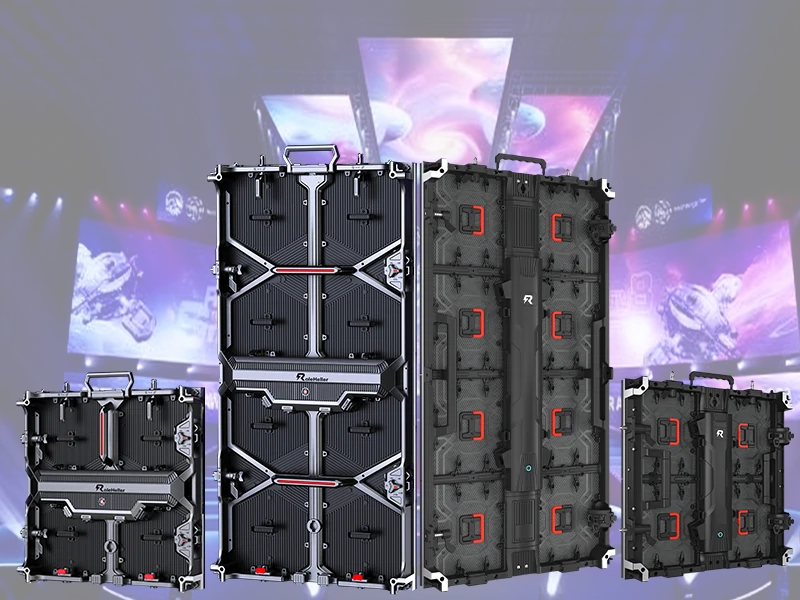
Stage rental & live events: Lightweight, modular panels that are easy to install and transport
Control rooms & monitoring centers: Stable performance for 24/7 operation
Compared to finer pitches like P1.9 or P2.5, P2.97 costs 30-40% less while still offering HD-quality visuals. And compared to coarser pitches like P3.91, it gives you noticeably sharper images for close-range viewing. That's why it's one of the most popular specs for indoor LED walls in the global market.
Not all "manufacturers" on Alibaba or Made-in-China are actual factories—some are just trading companies marking up prices by 20-30%. Here's how to tell the difference and pick the right partner:
Ask for a live video tour of the production line, aging test area, and warehouse. Real factories will have SMT machines, module assembly lines, and a dedicated QC team. You can also check their business license: real manufacturers will have "production" or "manufacturing" in their business scope, not just "sales" or "trading".
For the US and EU markets, your LED walls must have at least CE (EU), ETL (US), and FCC (US) certifications. Reputable factories will have these certificates readily available and can provide test reports for each batch. Don't accept suppliers who say "we can get the certificate for you"—that usually means they're using fake or borrowed docs.
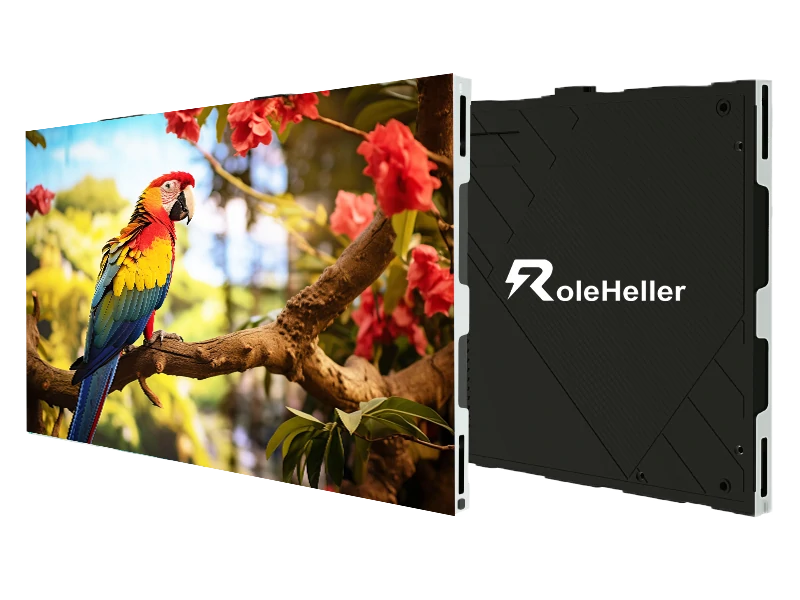
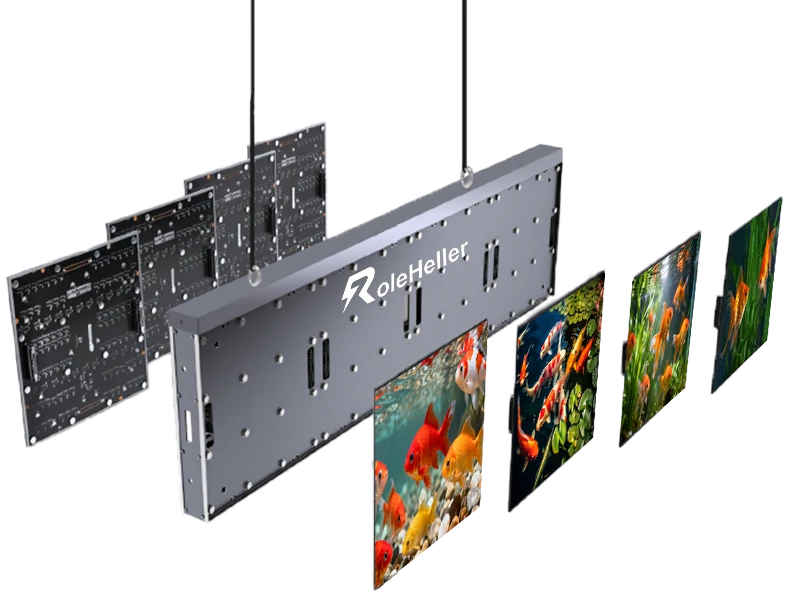
Good manufacturers offer OEM/ODM services: you can customize cabinet size (500×500mm, 500×1000mm, or custom dimensions), cabinet color (black, white, or custom Pantone colors), logo printing, and even adjust brightness or refresh rate based on your project needs.
Reliable factories provide 2-3 year warranties, free replacement parts for the first year, and online technical support via WhatsApp/Email. Some even send engineers overseas for on-site installation guidance for large projects (usually for orders over 50 square meters).
Ask for photos and videos of completed projects in your region. If the supplier has worked with buyers in your country before, they'll already understand local voltage standards, installation requirements, and import regulations.
Prices vary based on specs, order quantity, and supplier type. Here's a real-world reference based on 2026 market data for standard indoor P2.97 LED panels:
| Specification | Sample Price (1-5 pieces) | Bulk Price (20+ pieces) | Key Features |
|---|---|---|---|
| 500×500mm, 3840Hz refresh, Nationstar LEDs | $180-$230 | $150-$190 | High refresh, no flicker on camera, ideal for studios |
| 500×500mm, 1920Hz refresh, Kinglight LEDs | $120-$160 | $98-$130 | Cost-effective, perfect for static advertising |
| 500×1000mm, 3840Hz refresh, Nationstar LEDs | $340-$420 | $280-$350 | Faster installation, fewer cables, for large permanent installs |
| Die-cast aluminum cabinet, front maintenance | +$20-$30 per panel vs standard | +$15-$25 per panel vs standard | Easier maintenance, slimmer profile (40-50mm thick) |
Note: Prices above are for panels only. If you need a turnkey solution (including video processors, mounting frames, cables, and flight cases), add $1,500-$3,000 for a standard 3×2 500×500mm setup.
I've helped dozens of buyers navigate the ordering process, and here's the workflow that works every time:
Send Your Project Requirements: Share your screen size, resolution needs, installation environment (indoor only, humidity levels), and budget range. The factory will send you a detailed quote within 24 hours.
Request Samples: Always order 1-2 sample panels first to check color consistency, brightness, and build quality. Most factories refund the sample cost when you place a bulk order.
Confirm the Proforma Invoice (PI): Make sure the PI includes all specs, warranty terms, delivery time, payment terms (usually 30% deposit, 70% before shipment), and Incoterms (FOB Shenzhen is most common).
Production & QC: Ask for production updates and pre-shipment photos/videos. Reputable factories will do 100% aging test (48-72 hours) and send you a QC report before shipping.
Shipping & Customs: Most buyers choose sea freight for bulk orders (takes 25-35 days to US/EU) or air freight for urgent samples (5-7 days). The factory can help with customs documentation if needed.
I've seen too many buyers make these mistakes, so let's save you the headache:
Paying too cheap: If a price is 30% lower than the market average, they're probably using recycled LEDs, low-grade driver ICs, or fake certifications. These panels will fail within 6-12 months, and you'll spend more on replacements than you saved upfront.
Not checking voltage compatibility: China uses 220V/50Hz, but the US uses 110V/60Hz. Make sure the power supplies are compatible with your local voltage, or ask the factory to customize them.
Ignoring import duties: LED displays usually have a 0-2.5% import duty in the US and 0-1.4% in the EU, but you need to confirm the HS code (8528591090) with your customs broker to avoid surprises.
Not asking for installation guides: Even if you're not buying a turnkey solution, ask the factory for installation videos and wiring diagrams. It'll save you hundreds of dollars in local labor costs.
I always tell my clients: don't just chase the lowest price. A reliable manufacturer might cost 10-15% more upfront, but you'll save money in the long run with fewer defects, longer lifespan (100,000+ hours for quality panels), and better after-sales support. Start with a small sample order, test the product, and then scale up once you're confident in the supplier.
If you have any specific questions about your project, feel free to drop a comment below—I'll do my best to help you out.
Quality P2.97 panels from reputable manufacturers last 100,000+ hours (about 11 years of 24/7 operation). Lower-grade panels may only last 30,000-50,000 hours.
Most established factories provide 2-3 year warranties, free replacement parts for the first year, and 24/7 online technical support via WhatsApp or email.
Yes, most original manufacturers offer OEM/ODM services. You can customize cabinet dimensions, color, logo printing, and even adjust brightness or refresh rate based on your project needs.
P2.6 has a finer pixel pitch (2.6mm vs 2.97mm), so it offers slightly sharper images at close range, but costs 20-30% more. P2.97 is more cost-effective for most standard indoor applications.
Ask for a live video tour of the production line, check their business license for "manufacturing" scope, and request to see their in-house QC and aging test facilities.
Most standard P2.97 rental panels support both front and back maintenance. Fixed installation panels usually support front maintenance only, which is more space-efficient.
Average power consumption is 115-150W/m², with maximum power consumption around 350-500W/m². Energy-efficient models with common cathode technology can reduce power consumption by up to 30%.
Yes, most reputable factories offer turnkey solutions that include panels, video processors, mounting frames, cables, flight cases, and detailed installation guides or even on-site engineer support for large projects.
Absolutely. P2.97 rental panels are lightweight (7-12kg per 500×500mm cabinet), easy to install with quick locks, and durable enough for frequent setup and teardown. They're one of the most popular specs for stage rental.
For the US, you need ETL and FCC certifications. For the EU, CE and RoHS certifications are required. Make sure your supplier can provide valid test reports for each batch.